
Social Media: The Apathy Epidemic
Ever thought why there is a lack of interest for the current, cruel events? There’s a reason for that, and you’ll never guess why.

THE DIE OFF OF EMPATHY
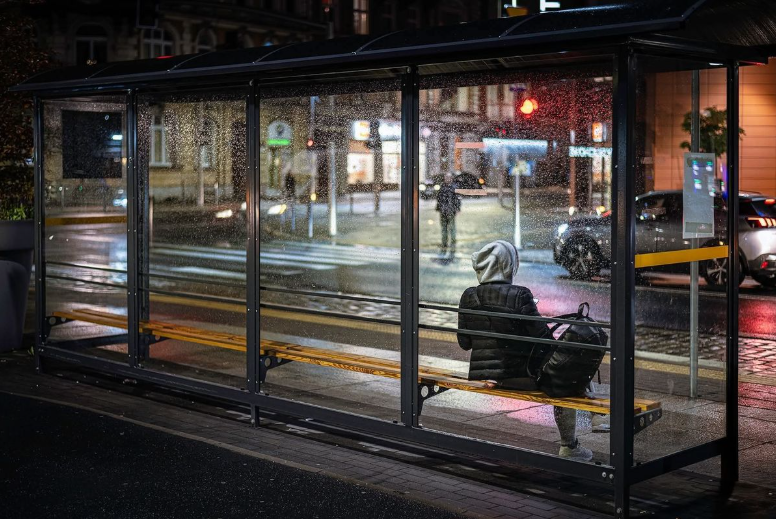
It’s a day like no other. A person sits underneath a bus stop, waiting for the bus to make their hourly rounds. To pass the time, they scroll on their phone mindlessly; social media is the cure for boredom after all! As they scroll, countless monstrosities lie within their feed. One video recounts the events of Ukraine being invaded, while another tells the story of a woman who was murdered just before her graduation.
In any situation, one should feel empathy—sorrow for the people in these events… but they don’t. To be frank, they’re sick of it, and they’re getting burned out from all the negativity. This is a common viewpoint amongst individuals in the modern age, and it's becoming a problem. The amount of empathy is decreasing, and it's all thanks to the constant stimuli of social media.
Social media is integrated into our lives, and it’s starting drastically younger each year. The mainstream focus on social media and its heavy usage has diminished the amount of empathy people experience and exhibit because of the repetition of events, addiction to social media, and lack of face-to-face communication.
For those who don’t know, empathy is the ability to understand and share the feelings of others. We all should feel empathy– but sometimes it gets too much, too repetitive. This is a phenomenon known as “Empathy Burnout”.According to Madeline Lucas, a certified therapist, they state that empathy burnout happens when a person is regularly expending much of their energy to care for others to the point that they themselves feel exhausted.When given access to technology and an unforeseen amount of free time, the most logical option would be to scroll social media…and what better time to doomscroll than during the Great Pandemic of 2020?During the pandemic, individuals were forced to stay within their homes. UnitedWay.org recorded that 61% of 200 individuals admitted to burnout to social justice issues during the pandemic, and that they empathize not out of concern, but because they felt like they should.
Repetitive stimuli result in apathy, a desensitized state, but due to the status quo of reacting emotionally to the issues, people are required to react. It was feigned empathy—something forced just so they wouldn’t be ostracized.
REPEATED MEDIA ONLINE
With desensitization, it occurs with the ease of accessing social media. With the easy access platforms, this can spark an addiction, thus causing empathy to slowly decrease. Frontiers in Human Neuroscience states that a person who is constantly online can be classified with an internet addiction disorder (IAD)– an inability to control internet use.
A study focused on the disorder was conducted, recruiting 16 individuals with IAD from local universities. The study was titled “Impaired Empathy Processing in Individuals with Internet Addiction Disorder: An Event-Related Potential Study”, and was written by Can Jiao, Ting Wang, Xiaozhe Peng, and Fang Cui.
The visual stimuli showcased an individual's limbs in either painful or non-painful situations. When the study was concluded, the results showed that the participants exhibited reduced sensitivity to the pain within the stimuli and reduced arousal levels. This means that due to the participant’s constant access to social media, which stemmed from their IAD, they had become less affected by stimuli that would otherwise evoke a sense of pain within others.
The repetition of various stimuli causes the brain to become used to it in order to protect the brain from further stress. The perpetual access to social media forces the brain to resort to a final act of defense: Desensitization.
THE LACK OF FACE-TO-FACE COMMUNICATION
In spite of the cons, many believe that social media fosters empathy. It provides a home for those who otherwise would feel alone, and people can empathize with one another. In reality, this couldn’t be any more wrong. While true to an extent, the focus on social media and its heavy usage has diminished the amount of empathy experienced due to the lack of face-to-face communication between individuals.
People are constantly on their phones and cannot see body language. Since the dawn of time, people have relied on face-to-face communication. It’s what allowed them to survive– to live. As noted by IESE.edu, our faces help communicate what words cannot; they allow for unnecessary conflict that would otherwise arise. With the lack of face-to-face communication, it dysregulates people’s actions compared to what people would typically do if present with another. This is commonly seen within the digital act of cyberbullying.
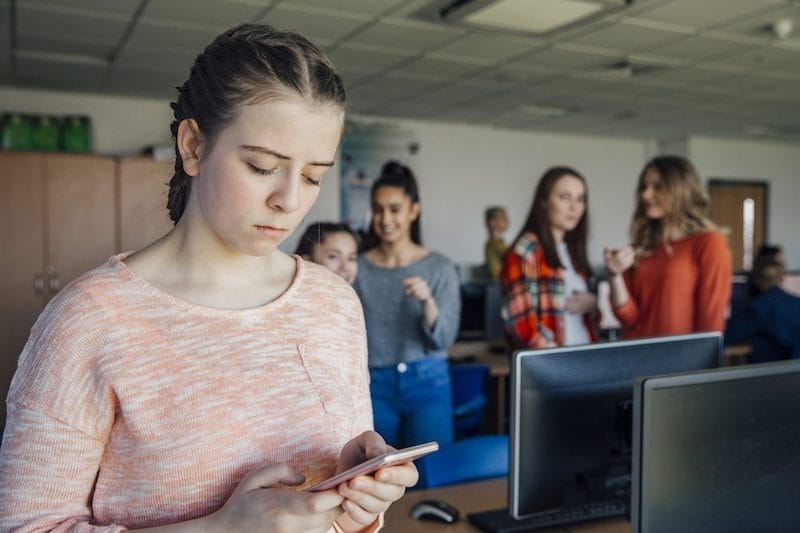
Annapolis.gov states that nearly 42% of kids have been bullied online, and 58% admit that they have had mean things said about them. They also bring up that while school typically ends at 3:00 P.M., the internet doesn't: it's endless. The heavy, never-ending presence of social media induces that behavior.
When present online, individuals cannot see other users' expressions, allowing for more unfiltered language. If people are online constantly, this only fuels the usage of cruel words. They cannot see the other user’s expression when they use such words. It is true that social media fosters empathy, but simultaneously, it hinders its growth.
THE SIGNIFICANCE
A person sits underneath a bus stop, drowning out the sound that surrounds them. Immersed in their phone, they scroll emotionlessly through endless events that would otherwise evoke a sense of pain, sorrow. They’ve seen this genre one too many times.
Hours on end, they scroll, addicted to their handheld device and the world that lies within it, repeatedly seeing items their brain has put up a barrier against. Typing out bitter comments on posts, they lack face-to-face communication that would otherwise regulate their behavior.
One may think, “So what? It doesn’t affect me”, and that's the whole point. Empathy is the ability to share the feelings of others, to put oneself in another’s shoes. They need to realize how they would feel if this were happening to them, how they would react if present in person with them, and put that same effort online that they would do offline.
Realize this: empathy is the foundation of life. Ignoring it fosters hate within the world. How can you empathize?